Showing posts with label Top 100. Show all posts
Monday, 16 May 2011
100 Greatest Sport Stars - Number 89 - Shirley Strickland
Coming in at number 89 on our list of the top one hundred ever sports stars is Shirley Strickland.
Why? She has won more Olympic Medals than any other Australian athlete – which seems to us like a good enough reason.
Shirley was born, a farm girl, in 1925 – the second oldest of dive children. The town of Pithara in Western Australia’s wheat belt had no idea of the talent they were about to nurture.
Yet she had pedigree: her father, Dave, has been an athlete: the only thing that had stopped him from taking part in the 1900 Olympics in Paris was the distance and the money that would have had to be spent to get him there.
Shirley would set the record straight for her family - and for Australia too.
Living on an isolated farm, Shirley Strickland received her early education by correspondence – but she did later go on to attend the Northam High School. It was here that her promise as an athlete was first recognised – she won all but two of the 49 events that she entered while she was studying there.
The University of Western Australia was her next stop – she graduated from there in 1946 and wnt on to lecture in physics and mathematics at Perth Technical College. While there she was the wing in the hockey team but what really marked her out was her ability as a hurdler and sprinter. The former world professional sprint champion, Austin Robertson, coached her during her time at Perth.
As a result her 100m yards time went from 11.8 to 11 and she went on to win four Western Australian titles in 1947 – throwing in the shot put as a casual fifth. It was time to take things seriously.
In 1948 she took the national title in the 80m. That gave her a ticket to the first post Second World War Summer Olympics in London where she competed in the 100m, 80m hurdles and took part in the 4x100 relay. She came third in her solo events, taking silver with the team in the relay.
The British Empire was on the wane but that did not stop her from taking three gold medals at the Games in 1950. Following this up, she participated in the 1950 Helsinki games where a gold medal in the 80m hurdles beckoned – a world record time of 10.9 seconds. She also collected silver and bronze in the 4x100m relay and the 100m hurdles.
Another world record was beaten in 1955 where she was times at 11.3 seconds for the 100m hurdles. The Olympics of 1956 on home territory in Melbourne brought gold in both the 80m hurdles and the 4.100m relay.
Following her athletic career she became fully involved with athlete administration in the Olympic movement and participated in this role in the 1968 and 1976 Olympics in Mexico and Canada. She was one of the torch bearers at the opening ceremony of the Summer Olympic Games in Sydney, Australia in 2000.
The following year she gained some notoriety when she sold off all her memorabilia, including her Olympic medals. The collection was acquired by the MCG Museum in Melbourne, purchased but a group of business people who remained anonymous but who, like Shirley, wished to see her outstanding collection remain in Australia.
Sunday, 12 December 2010
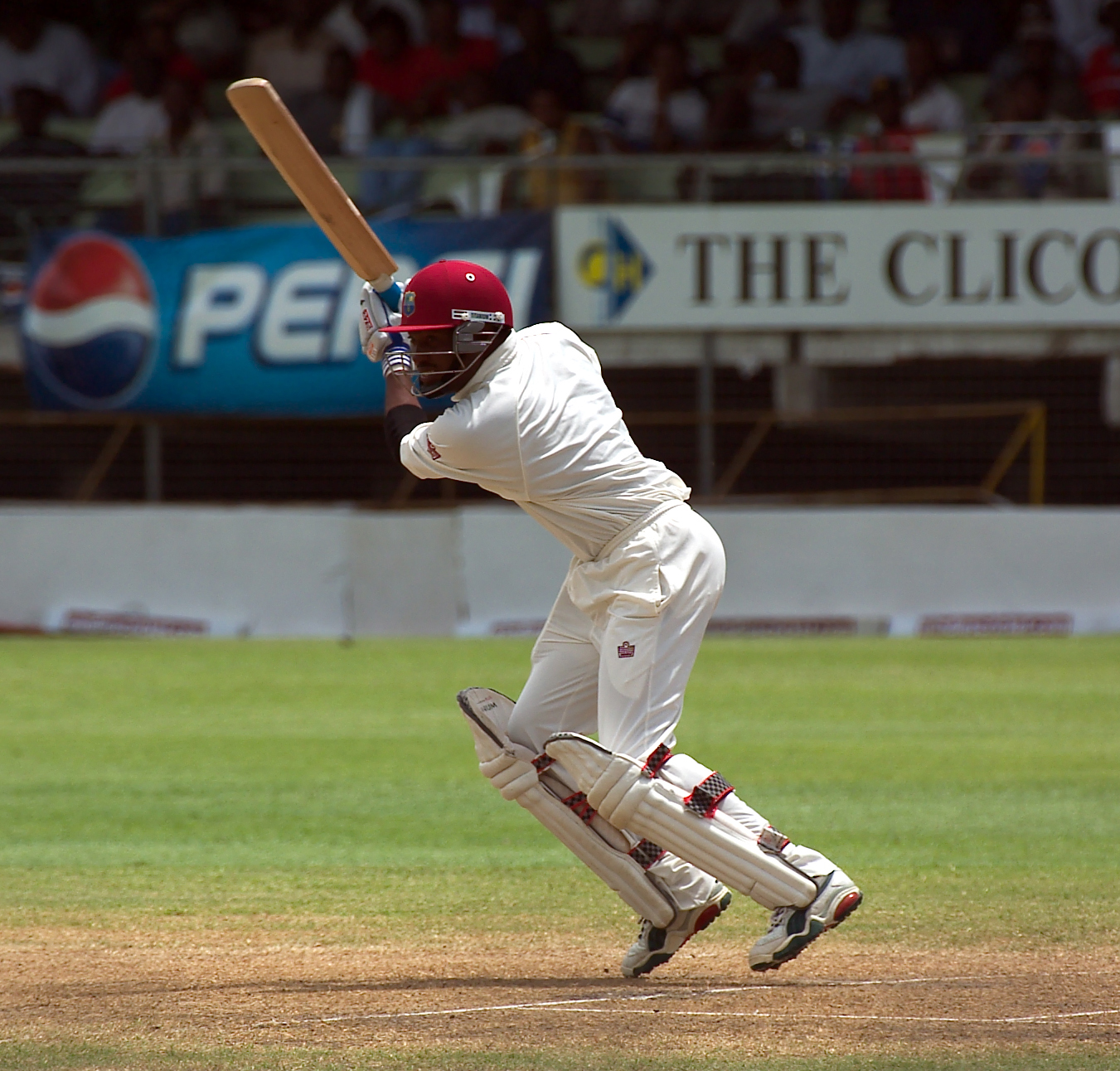
100 Greatest Sports Stars - Number 90 - Brian Lara
On 2 May 1969 a newborn child’s cries rang out in Santa Cruz, Trinidad and Tobago. Not an unusual event in itself but if the parents of the child, christened Brian Charles Lara, could see what was in the future for their son their pride at his birth would have been doubled.
He grew up to be one of the most celebrated cricketers of all time, topping the Test batting rankings a number of times and seizing and holding several records, including the highest individual score in first-class cricket. On that occasion in 1994 he scored an amazing 501 not out for Warwickshire. His dumbfounded opponents, Durham had to simply look on as he scored the first and only quintuple hundred in the history of first-class cricketing.
It was little surprise that as that famous day wore on fans rushed to the ground at Edgbaston to witness history being made.
He also is the holder of the record for the highest individual score in a test innings. This time he was playing against England at Antigua. The celebrated day saw him score 400 not out. Over the course of his career he scored many hundreds, but is the only batsman to do that and score a double century, a triple, a quadruple and a quintuple over the course of his career.
To add to all this, in a single over in South Africa in 2003 he scored 28 runs off Robin Peterson of South Africa. Put simply, the man was unstoppable.
Lara has his family, perhaps, to thanks for his cricketing success. As the tenth of eleven children it would not surprise many if the parents didn’t watch their second to last offspring too often, with so many in the family. Yet it was his sharp eyed father, Bunty and Agnes his older sister who spotted his potential at the age of six and enrolled him in the Harvard Coaching Clinic.
As such, Lara’s early exposure to correct batting techniques would stay with him and be developed over his lifetime. When he was a teenager he was in teams in the Trinidad schoolboy’s league. He caught the eye of the national under 16 team when his average in the league was an amazing 126 per innings, not to mention his tally of 745 runs in the league.
At the age of fifteen he played his first West Indian under 19 tournaments and the same year saw him represent his country for the first time. His heroes, Gordon Greenidge, Viv Richards and Roy Fredericks were soon to have company in that special league of their own.
1987 was a memorable year as Lara scored 498 runs in the West Indies Youth Championships – the first record of many that he was to break. The following year he made his debut for Trinidad and Tobago and scored 98 in his second first-class match. The same year saw him captain the West Indies in the Bicentennial Youth World Cup. Lara was on his way.
The following year his great opportunity presented itself – he was selected for the West Indies team (rather than the youth team) but this coincided with tragedy. His father, Bunty, died and Lara withdrew, coming back the year after to captain the B Team in Zimbabwe.
He was not to be held back again. In 1990 at the age of twenty he became the youngest ever man to captain Trinidad and Tobago. He also made his debut for the West Indies.
In 1993 his International career truly got underway when he scored 277 against Australia – his maiden test century. His efforts proved to be the turning point for the West Indies as they then went on to win the final two tests – and the series 2-1.
To commemorate this, Lara would name his first daughter after the city in which he had achieved this – Sydney.
In 1995 Lara was made Man of the Series in the test match against England. He captained the West Indies from 98 to 99 won Man of the Match against Australia as well as Man of the Series in the famous Four Test Series of 1999.
Lara was reappointed as captain against the touring Australians in 2003, and struck 110 in his first Test match back in charge, showing a return to stellar performance. Later that season, under his captaincy, West Indies won the two match Test series against Sri Lanka 1-0 with Lara making a double century in the First Test. In September 2004, West Indies won the ICC Champions Trophy in England under his captaincy.
He returned again to the captaincy of the West Indies in 2006 and led the team to victories against Zimbabwe and India. In the same year he became the first player in the team to ever pass the 10,000 run mark. He retired from international cricket in the following year.
Unable to resist it, he played again for Trinidad against Guyana – which they won. Lara’s cricket career is still happening today but what it holds for him is unsure. Whatever happens he will certainly go down in history as one of the best cricketers of all time.
Monday, 8 November 2010
100 Greatest Sports Stars - Number 92 - Adam Gilchrist
Anyone for cricket? Number 91 on our list of the top 100 sports stars is Adam Gilchrist, who otherwise goes by the nicknames of Church or Gilly. He is the first but not the last cricketer to appear but this guy is not yet retired from the game and has redefined the role of the Australian national cricket team.
Born in 1971, Glichrist is an attacking left-handed batsman but it is for his wicket keeping that he holds world records. He is the current holder of the record for the most dismissals by a wicket keeper by an Australian in test cricket and in One Day Internationals. He is generally thought to be one of the best ever wicket-keeper-batsman combinations in the history of the sport of cricket.
There is more – he is the only player ever to have hit 100 (that’s ONE HUNDRED) sixes in Test Cricket. Not only that, he has 17 Test centuries under his belt as well as 16 ODIs. As a player who was destined to be primarily a wicket keeper, that is some achievement.
He also has a unique record – the only player ever to score a minimum of fifty runs in successive World Cup finals (99, 03 and 07) and has actually won three titles – one of only three players to do so.
At the age of 17, Adam Gilchrist spent a summer with Richmond Cricket Club in London. He performed so well that he was interviewed by the regional BBC Sports Reporter, Michael Wale.
He has sometimes gone against the grain of the establishment in as much as he is a self-confessed walker. That is, occasionally he disagrees with the umpire, who says he is in – and walks off! Fair is fair, however, a player is more likely to know when they are out than the umpire yet many would make the contrary decision. Not so Gilchrist.
His first class debut was in 1992 and his first ODI (One Day International) debut followed four years later, with his Test debut in 99. He has played for his home nation in 96 test matches and getting on for 300 ODIs. In both forms he was Australia’s Vice-captain and captained the team when the regular captains were unavailable.
Here is Adam Gilchrist smashing a century in 57 balls in the Ashes 3rd test. He is the second fastest behind Viv Richards.
Although he has now retired from International cricket he still plays for the Indian Premier League with the Deccan Chargers. He was made captain in 2009 and led the team to the Twenty20 title in the same year.
It was his style of attack batting that was key to Australia’s ODI successes when he was a member of the team, and as such it was Gilchrist who invariably opened the batting. For a wicket keeper his batting average is more than reasonable – in the upper 40s in tests with a Test strike rate of 82 runs for every 100 balls and he is renowned for batting shots to every area of the field in a dynamic and consistent manner.
Outside of the sport Gilchrist serves as an ambassador for the World Vision charity in India – a country in which he is immensely popular.
Friday, 22 October 2010
100 Greatest Sports Stars - Number 95 - Heather McKay
Australia, it cannot be doubted, has produced many world class sports stars, per capita possibly more than any other country in the world. That and the little green god aside we have to take our hats off to number 95 on our lists of the 100 greatest sports stars ever – possibly the greatest sportswoman that Australia has ever produced. Yet why, we wonder, have so few people ever heard of the incomparable Heather McKay?It could be the fact that her sport was squash (she is not retired): for whatever reasons the sport has not joined the likes of golf and tennis in the megabucks or for that matter mega interest stakes. It could be, also (and we say this shamefully) that in an oft overlooked sport the female players are generally ignored even more than the male. Whatever the case, it remains that Heather McKay has one of the most outstanding sports records that you will ever hear about.
Domination isn’t quite the word for what she represented in the squash world. She was the ultimate squash player of the 60s and 70s and won 16 British Open titles in a row between 62 and 77. She also won the World Open title when it began in 1979. During this period she was never defeated. Not once. Never. Hats off to Heather! How many other sports stars have that sort of record? Yes, we couldn’t either.
What was more she also played racquetball and field hockey at top levels. Born in 1941 McKay was defeated only twice in her career (once in 60 and again in 62). When she retired in 1981 she had not been beaten since that day in 1962. Her first British Open came at the age of 21 and then there was almost a generation of comfortable wins. In 1968 she won the final against Bev Johnson (also an Australian) without conceding a single point.
Retiring at the age of 40 from top-level squash she has remained active in the Masters Level events, winning two over-45 and two over-50 World Championships. To cap it all she was a member of the Australian Women’s Hockey Team and won the American (Amateur) Racquetball Championship in 1979. Moreover she won the professional version of that title three times (80, 81 and 84) as well as winning the Canadian Racquetball Championship five times.
Some amazing facts about an amazing sportswoman. Although little known outside of her arena, are you surprised any longer to find here on this top 100 sports stars list?
Friday, 30 July 2010
100 Greatest Sports Stars - Number 98 - Annika Sörenstam
Annika Sörenstam giving an interview on the Today Show (aired 24th April 2007), on the opening of her new academy
From the fjords of Sweden, Annika Sörenstam comes in to our list at number 98. She is often referred to as The Female Tiger as her achievements in womens' golf rank her as one of the most successful golfers (of either gender) in the sport's history. She won 90 international tournaments before she retired at the end of the 2008 season. This made her quite comforably the female golfer with the most winds to her name.The list of her wins is staggering. She has 72 official tournament wins to her name and that includes ten majors and 18 non-LGPA tournaments. She also has earned a pretty penny from the sport - her fortune is estimated at well over $US20 million. She now holds joint American and Swedish citizenship.
She also made history in 2003 when she went head to head against the chaps as the first woman to play in a men's PGA tour event since 1945. Marketed usually as simply Annika her off course interests include a golf academy along with the usual branded products. However, she also designs golf courses themselves and, a nobler pursuit perhaps, runs a charitable foundation in her name.
A BBC Tribute to Annika Sörenstam
Labels:
100 Greatest Sports Stars,
Annika Sörenstam,
Best of the best,
Best Player,
Golf,
Golfer,
Golfing,
Sorenstam,
Top 100
Wednesday, 28 July 2010
100 Greatest Sports Stars - Number 99 - Ian Thorpe
Ian Thorpe breaks the 400m World Record in 2002.
Nicknamed the Thorpedo or Thorpey, Ian Thorpe, the Australian freestyle swimmer, comes in at number 99 on our list of the top 100 greatest sports stars ever. All told he won five Olympic gold medals which is a record for an Australian and he was also the first person ever to win six gold medal in a single World Championship. His results are staggering, 11 World Championship golds (the second highest ever by a swimmer). The pool was his natural home and as well as being made Australian Swimmer of the Year for four years in a row he was also given the title of Young Australian of the Year in 2000.He started young, too, first representing his country at the tender age of 14. Plus he was the youngest individual World Chamion when he won the 400 meter freestyle in 1998 (when he was 16). From that point there was no stopping the boy wonder and he dominated the 400 meters until his break after the Olympics of 2004.
He had 13 individual long course world records to his name and with teammates five relay world records, When he won the bronze in Athens for the 100m freestyle it made him the only man to have ever won medals in the 1-2-4 hundred meter combination. It is unlikely that this track record will be beaten any time soon.
In this video, Thorpe shows the five major strokes important to success in the freestyle event.
Labels:
100 Greatest Sports Stars,
400,
Australia,
F reestyle 200,
Ian Thorpe,
meters,
metres,
Number 99,
Olympic,
Sportsmen,
Swimmer,
Top 100,
World Record
Thursday, 22 July 2010
100 Greatest Sports Stars - Number 100 - Andrew Johns
At Number 100 on our list of the greatest sports stars (ever!) is the legend who goes by the name of Andrew Johns. An Australian Rugby League footballer he is thought of by many as the best player of all time. During his career he was often trumpeted as the world's best halfback. During the 1990s and the 2000s he captained the Newcastle Knights team at home and played 249 games for the team 0 a record. He also represented Australia in 2 World Cups and played in twenty one test matches for the Aussie national side.
He retired from the game of rugby league at the age of thirty two in 2007. This was young, but he had had a lot of injuries which, had he continued playing, would have seriously threatened his health both on the pitch and in the future. However, he finished playing rugby league as the highest points scorer in the history of the Australian First Grade premiership. How many pointa? A total of 2,176.
Andrew Johns was announced as the Best Player of the Last 30 Years by the influential Rugby League Week. For the imaginary Team of the Century he was named as halfback. An outstanding career which places him at number 100 in our list of the 100 greatest sports stars in the universe!
Labels:
100 Greatest Sports Stars,
Andrew Johns,
Best of the best,
Best Player,
Greatest,
History,
List,
Rugby,
Rugby League,
Sporting,
Sportsmen,
Stars,
Top 100,
Top Rank
Sunday, 27 June 2010
100 Greatest Sports Stars - the Full List
So, here it is - our full list of who we judge to be the 100 Greatest Sports Stars Ever. You may not agree with the list - so feel free to make outraged comments about us leaving out your favourite sports star! If you feel strongly enough, you could always write a homage article to them which we will be happy to publish!
For an in depth look at each of these stars, click the tab at the top of the page - or this link - 100 GREATEST SPORTS STARS
100 - Andrew Johns
99 - Ian Thorpe
98 - Annika Sorenstam
97 - Chris Evert
96 - Jonah Lomuh
95 - Heather McKay
94 - Alexander Popov
93 - Shaun White
92 - Adam Gilchrist
91 - Roger Bannister
90 - Brian Lara
89 - Shirley Strickland
88 - Janet Evans
87 - Sergey Bubka
86 - George Best
85 - Ted Whitten
84 - Dawn Fraser
83 - Serge Blanco
82 - Ian Botham
81 - Usain Bolt
80 - Jackie Robinson
79 - Fanny Blankers-Koen
78 - Greg Norman
77 - Kareem Abdul-Jabbar
76 - Zinedine Zidane
75 - Bo Jackson
74 - Steffi Graf
73 - Willie Shoemaker
72 - John McEnroe
71 - Babe Zaharias
70 - Gary Ablett Sr
69 - Jean-Claude Killy
68 - Johnny Raper
67 - Arnold Palmer
66 - Sachin Tendulkar
65 - Rafael Nadal
64 - Arnold Schwarzenegger
63 - Mickey Mantle
62 - Jahangir Khan
61 - Wally Lewis
60 - Daley Thompson
59 - Wayne Carey
58 - Edwin Moses
57 - Wilt Chamberlain
56 - Joe Montana
55 - Miguel Indurain
54 - Joe Frazier
53 - Juan Manuel Fangio
52 - Jackie Joyner-Kersee
51 - Herb Elliott
50 - Zico
49 - Hicham El Guerrouj
48 - Wayne Gretzky
47 - Steve Redgrave
46 - David Campese
45 - Viv Richards
44 - Johann Cruyff
43 - Mark Spitz
42 - Michael Johnson
41 - Garfield Sobers
40 - Leigh Matthews
39 - Joe Louis
38 - Ty Cobb
37 - Haile Gebrselassie
36 - Nadia Comaneci
35 - Bobby Jones
34 - Kelly Slater
33 - Valentino Rossi
32 - Colin Meads
31 - Martina Navratilova
30 - Jerry Rice
29 - Mike Tyson
28 - Mick Doohan
27 - Pete Sampras
26 - Michael Shumacher
25 - Jim Brown
24 - Bjorn Borg
23 - Jim Thorpe
22 - Paavo Nurmi
21 - Eddy Merckx
20 - Alfredo di Stefano
19 - Jesse Owens
18 - Shane Warne
17 - Billie-Jean King
16 - Babe Ruth
15 - Sugar Ray Robinson
14 - Jack Nicklaus
13 - Emil Zatopek
12 - Ayrton Senna
11 - Michael Phelps
10 - Lance Armstrong
9 - Carl Lewis
8 - Roger Federer
7 - Pele
6 - Rod Laver
5 - Diego Maradona
4 - Tiger Woods
3 - Michael Jordan
2 - Don Bradman
1 - Muhammad Ali
Labels:
100 Greatest Sports Stars,
100 Greats,
List,
Sporting Greats,
Top 100
Monday, 14 June 2010
Subscribe to:
Posts (Atom)